
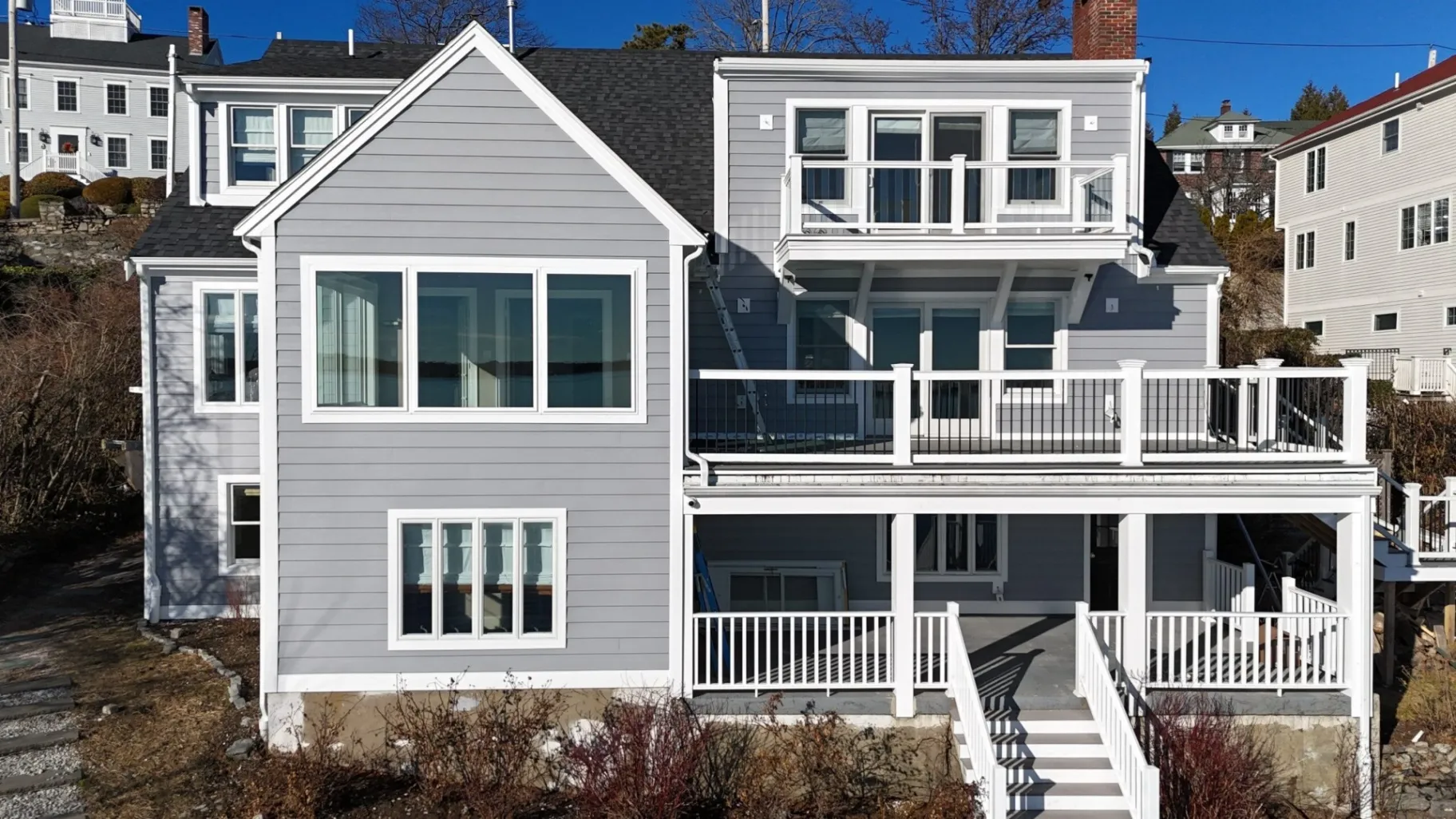
The home addition cost Hingham MA homeowners can expect runs $150 to $400+ per square foot, depending on scope, foundation work, and finish level. For a 400-square-foot addition, most Hingham families budget $60,000 to $160,000. US ProPaint & Renovation, based right in Hingham, builds home additions and accessory dwelling units across the South Shore. Understanding how an addition compares to a dedicated ADU is the decision we help families navigate every season.
By JR Reis, Owner, US ProPaint & Renovation · Last updated July 2026
The cost of a home addition in Hingham typically falls between $150 and $400 per square foot. So a standard 400-square-foot bedroom addition runs $60,000 to $160,000, and a larger 800-square-foot family room addition runs $120,000 to $320,000. How much do home additions cost at the high end? Projects pushing $400+ per square foot usually involve full second-story builds, complex foundation work, or premium finish packages.
Notably, the wide range reflects real variables we see on South Shore job sites, not marketing hedging. In fact, your specific cost depends on three things we assess on every free site evaluation.
A home addition cost calculator can give you a rough national range. However, it cannot tell you whether your rear lot line has the setback clearance you need, or whether your electrical panel can carry the added load. That is what the site evaluation is for.
To begin with, structural work is consistently the most expensive phase of a home addition. Foundation, framing, and roofline integration typically account for 35 to 50 percent of total project cost. On a Hingham property with a crawl space or older concrete-block foundation, foundation work alone can run $15,000 to $40,000 before a single interior wall goes up.
After structure, mechanical rough-in drives the next major line item. HVAC extensions, electrical panel upgrades, and plumbing tie-ins all require licensed sub-trades and inspection sign-offs through the Hingham Building Department. Because of that, skipping the permit process is not an option. Unpermitted additions in Massachusetts cannot be legally disclosed at sale, and they create significant liability at closing.
By contrast, interior finishes are the most customizable slice of the budget. Flooring, trim, drywall, cabinetry, and paint are the easiest place to calibrate scope without touching structural costs. They are also where working with a single contractor, rather than managing trades yourself, tends to pay for itself fastest.

Often, Hingham multigenerational families on half-acre lots weigh whether an addition or a detached ADU better serves their needs. The right answer depends on three practical factors: desired privacy, long-term flexibility, and total carrying cost.
These are not always competing outcomes. In fact, plenty of families we have worked with built a bedroom addition first, then returned years later for a detached ADU once the kids grew up. So the two projects are more often a sequence than a choice.
Here is one practical note on permitting. Since Massachusetts clarified ADU by-right approvals through state housing legislation, ADUs on single-family lots have become easier to permit in many South Shore towns. Even so, Hingham ADU projects typically involve more architectural drawings and a longer review cycle than a room addition. That is especially true when new utility connections need sign-off from the Department of Public Works.
The pros and cons of additions versus ADUs come down to privacy, cost, permitting timelines, and long-term flexibility. All of those shift depending on where a family is in life. The table below shows where Hingham projects typically land.
Project Type | Typical Hingham Range | Primary Cost Driver |
Room addition (400 sq ft) | $60,000 – $160,000 | Foundation, HVAC tie-in, roofline |
Attached in-law suite | $100,000 – $200,000 | Separate kitchen/bath plumbing, private entry |
Detached ADU | $150,000 – $400,000+ | Full independent structure, separate utilities |
A cost calculator will give you a national midpoint. However, it will not reflect the Hingham labor market, the Stretch Code compliance layer, or whether your lot can accommodate the structure you want. That is why every project we quote starts with an on-site evaluation, not an online form.
Ultimately, both a permitted home addition and a well-built ADU increase resale value in Hingham, but through different mechanisms.
First, a home addition raises value by increasing the primary dwelling’s appraised square footage. Buyers in Hingham pay a measurable premium per square foot for a larger home. As a result, a well-designed bedroom or family room addition typically returns 50 to 80 percent of its cost at resale, which is meaningful value in a supply-constrained market.
By contrast, an ADU raises value differently. A permitted detached unit adds a separate income-producing or occupiable asset. For example, buyers can use it for rental income, in-law living, or a dedicated home office. In Hingham, where inventory stays tight and demand for multigenerational space keeps growing, a well-built ADU can add $100,000 to $200,000 or more to assessed value. In many cases, it outperforms a same-cost addition on dollar-for-dollar return once rental income potential is factored in.
So if resale value is the primary goal and the lot supports it, a detached ADU in Hingham’s current market typically wins. If the goal is living space that integrates with the primary home, a home addition is the cleaner path. Both are sound investments. The right one depends on how the lot, the budget, and the life plan line up.
Structural work, meaning foundation, framing, and roofline integration, is the costliest phase, typically 35 to 50 percent of total cost. Mechanical rough-in, including HVAC extensions, electrical panel upgrades, and plumbing, is the second-largest category. Interior finishes are the most budget-flexible portion and the easiest place to adjust scope without touching structural line items.
An ADU, or accessory dwelling unit, is a secondary housing unit on the same lot as a primary single-family residence. It can be detached, like a backyard cottage, attached, like an in-law suite with a private entrance, or a converted interior space like a basement apartment. Massachusetts law now allows ADUs by right on single-family lots, which streamlines the permitting path for Hingham homeowners.
It depends on your goals. A home addition is the better path for permanent square footage, shared-utility living, and budgets under $150,000. An ADU is the better path for privacy, rental income potential, and long-term flexibility. We build both and can help you model the real cost and value difference before you commit to either.
In Hingham’s South Shore market, a permitted detached ADU typically adds more total resale value than a same-cost home addition, mainly because it adds a separate unit with verifiable rental income potential. A well-built room addition typically returns 50 to 80 percent of its cost through increased square footage value. Which one performs better depends on neighborhood comps, buyer demand, and how well the project was permitted and finished.
A room addition in Hingham typically runs $60,000 to $160,000 for 400 square feet. A detached ADU runs $150,000 to $400,000+, reflecting an independent structure, separate utilities, and a longer permitting cycle. Attached in-law suites fall between the two. We provide free on-site estimates for both so you can compare real numbers before committing to a design direction.
US ProPaint & Renovation, Inc. 175 Derby St STE 4 Hingham, MA 02043 Phone: (617) 922-6305 Toll Free: (800) 964-0717 MA Contractor License: 186517 Serving Hingham and the surrounding South Shore communities of Scituate, Cohasset, Norwell, Marshfield, and Weymouth.