
Most Quincy homes need repainting every five to seven years, and coastal properties closer to every three to five. The working season runs roughly May through October, when surface and air temperatures stay above 50°F. Book in winter — the good crews fill their calendars before the season opens.
By JR Reis, Owner & President · Last updated September 2026
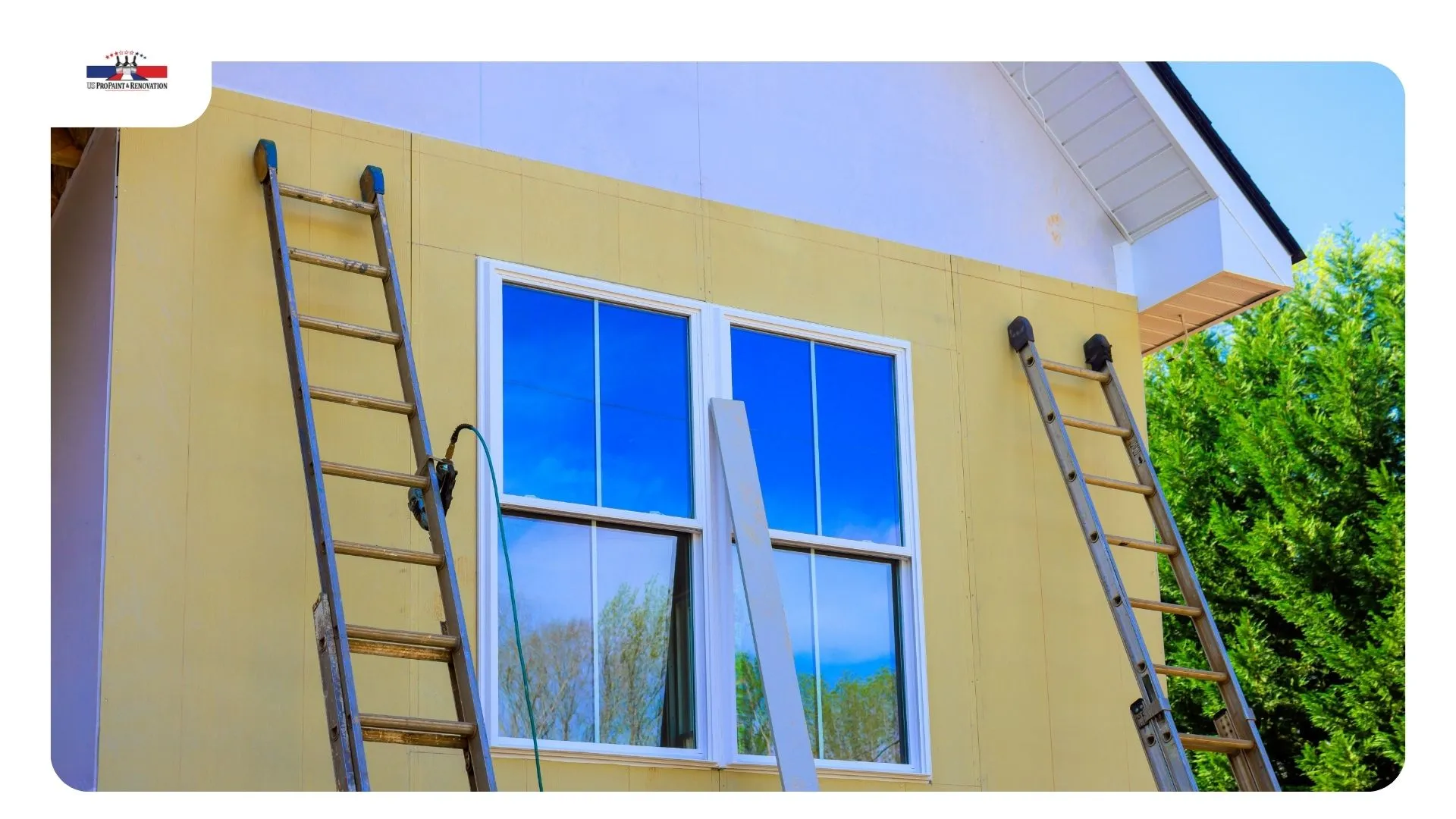
Paint isn’t decoration on a New England house. It’s the layer keeping water out of wood that would otherwise rot, and Greater Boston puts it through roughly 30 to 40 freeze-thaw cycles a year on top of humid summers and salt air off the harbour. Repaint too late and you’re not buying paint any more — you’re buying carpentry. Here’s how to time it.
Across New England the general answer is every five to seven years. Quincy splits into two answers, though, because a house in Squantum or Houghs Neck lives a different life from one inland near the Milton line.
| Surface | Inland Quincy | Coastal / exposed |
|---|---|---|
| Wood clapboard or cedar shingle | 6 – 8 years | 3 – 5 years |
| Vinyl or aluminium siding | 8 – 10 years | 7 – 8 years |
| Fiber cement | 10 – 15 years | 8 – 12 years |
| Painted brick | 15 – 20 years | 12 – 15 years |
| Wood trim, sills and fascia | 4 – 6 years | 3 – 4 years |
| PVC trim | 12+ years | 12+ years |
Two things that table hides:
Trim fails first, and often alone. Window sills, fascia, door casings and south- and west-facing elevations take the most UV and the most standing water. Plenty of Quincy homes need the trim done while the clapboards have another three or four years in them. If a contractor quotes you a whole-house repaint without asking whether that’s what you actually need, get a second opinion.
There’s a five-second test that beats any calendar. Throw a cup of water at your siding. If it beads and runs off, the paint film is still doing its job. If it soaks straight in and darkens the surface, the film has failed and the wood underneath is getting wet every time it rains. That’s the real signal — chalking, fading and hairline cracking are the visible version of the same thing.
A maintenance coat on high-exposure elevations at around year three can push a full repaint out meaningfully, and it costs a fraction of doing the whole house.
The season runs roughly May through October in Quincy. Late spring and early autumn are the sweet spots. Most exterior coatings need surface and air temperatures above about 50°F, and — the part people miss — the surface temperature matters more than the air temperature. A north-facing wall in the shade can be 15 degrees colder than the thermometer says, and a south wall in direct August sun can be too hot, flashing the paint off before it levels and leaving lap marks.
Humidity and dew point matter as much as temperature. Greater Boston summers average around 68% humidity. Paint applied when the surface is close to the dew point doesn’t cure properly, and a coat that gets dew on it overnight before it’s cured can fail within a season. This is why good crews stop painting mid-afternoon in September rather than pushing to sunset — the dew point catches up faster than the light fades.
Early autumn is underrated. September and early October in Quincy typically bring lower humidity than July and August, with temperatures still comfortably in range. If your schedule is flexible, it’s often the best window of the year.
November is a maybe, not a no. Low-temperature formulations from the major manufacturers apply down to around 35–40°F, which extends the season. But shorter days mean less cure time before evening temperatures drop, so it’s a case-by-case call rather than business as usual. We’ll tell you honestly if we think a job should wait until spring — pushing a repaint into bad conditions costs you the job twice.
On booking: the season is about six months long, and everyone wants their house painted in June. Calendars for the good crews fill in late winter. If you’re planning a 2027 repaint, calling in January or February gets you the date you want; calling in May gets you whatever’s left. Winter is also when we do estimates without the pressure of an open calendar, which usually means a more thorough scope.
Exterior painting is roughly 70% preparation, which is why two quotes for the same house can be thousands apart while both say nothing more specific than “paint the exterior.” Ask what’s in the prep, and compare that rather than the bottom line.
Ours runs: wash and remove chalk, mildew and salt residue; scrape and sand failed coatings back to sound material; replace any rotted wood before priming; spot-prime or full-prime bare surfaces with the right primer for the substrate; caulk joints, laps and penetrations; mask and protect; then two finish coats.
On paint systems for coastal New England, the specifics matter more here than in most markets. We specify 100% acrylic exterior coatings — they stay flexible through freeze-thaw movement where cheaper formulations get brittle and crack. Bare wood gets primed before topcoat, not just painted over. Any replacement clapboard or trim gets primed on all six sides, cut ends included, before it goes on the wall — this is the single most-skipped step in the trade and it’s why replacement boards on badly painted houses start rotting again within a few years. Salt-exposed elevations in Squantum and Houghs Neck get extra attention on the fasteners and the south-west exposures, because that’s where failure starts.
If your house predates 1978, the prep changes. Massachusetts runs its own lead programme through the Department of Labor Standards, and disturbing more than 20 square feet of exterior painted surface requires a Lead-Safe Renovation Contractor licence. Scraping an exterior clears that on the first wall. Quincy’s housing stock is heavily pre-1978, so this applies to most homes here — and it adds real cost, which is why a suspiciously cheap quote on an older house usually means someone isn’t planning to do it properly.

| Scope | Typical 2026 range (eastern MA) |
|---|---|
| Cosmetic only — stain blocked, primed, repainted | $250 – $600 |
| Small ceiling patch with texture match and paint | $400 – $900 |
| Ceiling section cut out, insulation checked, replaced and refinished | $900 – $2,500 |
| Large area or multiple rooms, framing involved | $2,500 – $8,000+ |
| Add: mold remediation | $10 – $20 per sq ft |
These are market ranges, not our quotes. Drywall labour in Massachusetts metros runs roughly $80–$110 per hour — among the highest in the country — and ceiling work costs meaningfully more than the same repair on a wall, because overhead work is slower, compound sags against gravity, and insulation usually has to come out and be inspected. Small repairs also carry a minimum call-out, so one patch costs far more per square foot than four patches done in the same visit. If you have several, get them done together.
On insurance. Homeowners policies in Massachusetts generally cover sudden and accidental water damage — a burst pipe, a failed water heater — but typically exclude gradual leaks and flooding, which needs separate flood coverage. That distinction is your insurer’s call, not ours, and we don’t act as public adjusters or negotiate claims. What we do provide is documentation: photographs of the damage before we touch anything, and a written itemised scope of the repair. Most homeowners find that’s what their adjuster asks for. Take your own photos too, before any repair work starts, and don’t dispose of damaged material until you’ve checked with your insurer.
We’re at 175 Derby Street in Hingham, about fifteen minutes from most of Braintree:
How much does water damage repair cost in Braintree?
A cosmetic repair — stain blocked, primed and repainted — runs roughly $250 to $600. A ceiling patch with texture matching runs $400 to $900. Cutting out and replacing a ceiling section with insulation checked runs $900 to $2,500, and larger or multi-room damage runs $2,500 and up. Mold remediation, if needed, adds roughly $10 to $20 per square foot.
Do you repair and repaint water damaged ceilings and walls?
Yes, both. We cut out and replace compromised drywall, check the cavity and insulation, match the existing texture, and repaint with our own crew. We handle repair and restoration after the water has been stopped — we don’t provide emergency extraction or structural drying.
Can a stained ceiling be sealed and repainted, or does it need replacing?
It can be sealed and repainted if the area is fully dry, the source is fixed, and the drywall is still firm with no sag, crumbling or visible mold. It needs replacing if the drywall is soft or sagging, mold is present, insulation above was saturated, or it has been wet more than once. Sealing requires a shellac or oil-based stain-blocking primer — a water-based primer lets the stain bleed back through.
Do you match existing texture and finish when repairing?
Yes. We match knockdown, orange peel, skip trowel and smooth finishes, and we work with plaster as well as drywall on older homes. Texture matching and repainting are done by our own crews as part of the same job, so there’s no second contractor and no second wait.
Do you work with homeowners insurance claims for the repair?
We document the damage with photographs before work begins and provide a written itemised scope, which is typically what an adjuster asks for. We aren’t public adjusters and we don’t negotiate claims on your behalf — the claim stays between you and your insurer. Take your own photos before any repair starts, and check with your insurer before disposing of damaged material.
US ProPaint and Renovation
Adress:175 Derby St STE 4 Hingham, MA 02043
Office: (617) 922-6305 ·
Toll free: (800) 964-0717
Massachusetts Contractor License 186517 ·
Mold Inspector CRMI0000036883 · Mold Remediator CMR0000036885 Serving Braintree and the South Shore, including East Braintree, South Braintree, Braintree Highlands, Weymouth, Quincy, Milton, and Hingham.