
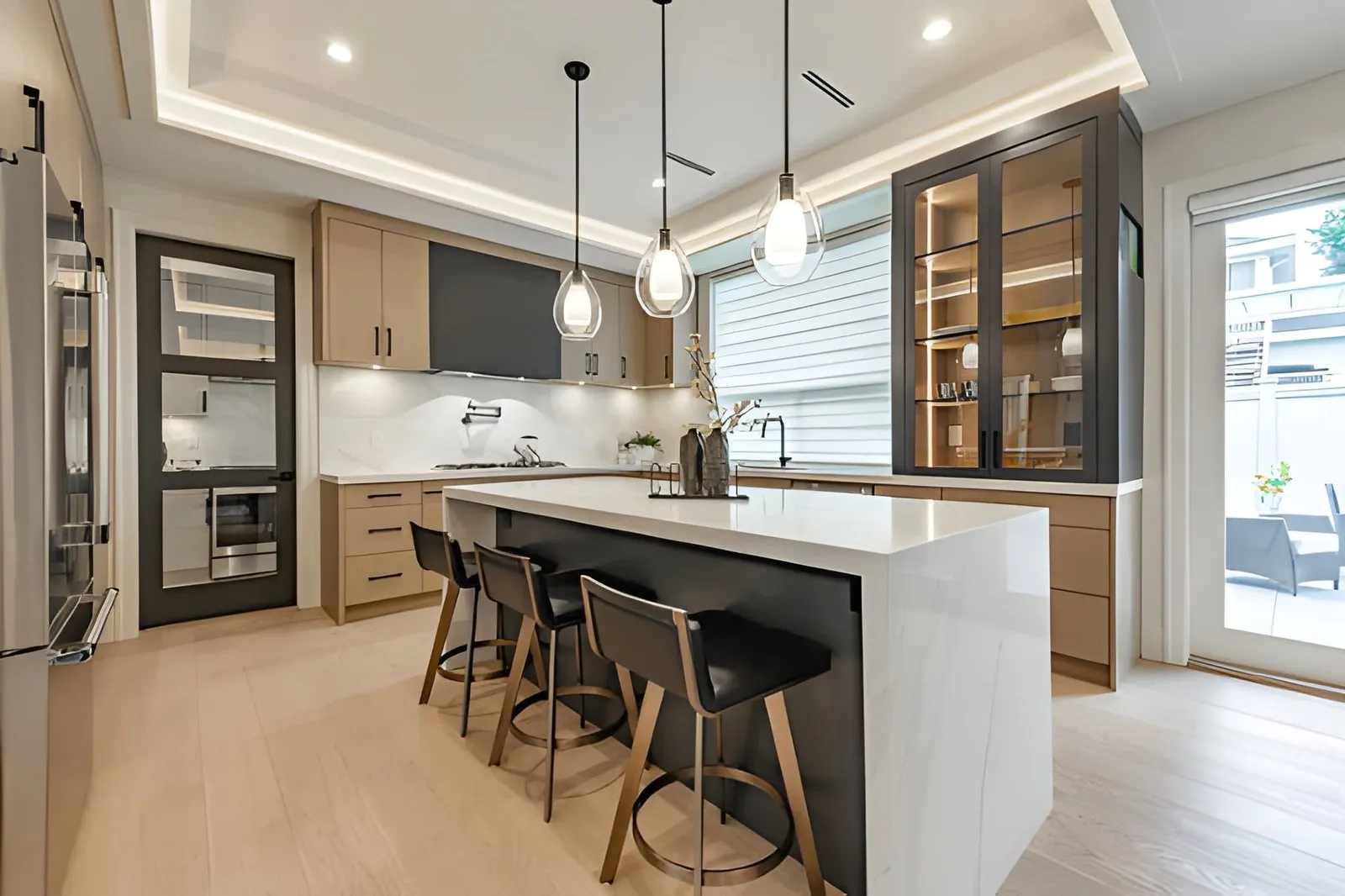
A kitchen renovation with US ProPaint starts with a free professional design, then follows one of two paths depending on your kitchen’s actual condition — a full remodel or a faster cabinet refacing through the US Pro Method — with one licensed crew handling design through final walkthrough.
By JR Reis, Owner · Last updated July 2026
We’ve been designing and building kitchens across the South Shore, Greater Boston, and Cape Cod since 2004, and the biggest thing separating a good kitchen renovation from a disappointing one usually isn’t the finishes — it’s whether the layout, wiring, and plumbing behind the walls got understood before the first cabinet came out.
Nationally, HomeAdvisor’s 2025 cost data puts the average kitchen remodel at $27,013, with most homeowners spending between $14,592 and $41,595 — a range wide enough that “average” isn’t a very useful number on its own. Scope explains most of that spread: a cosmetic refresh sits near the bottom, while a full layout change with new plumbing and electrical runs push well past $60,000.
Cabinetry tends to be the single biggest line item, since it drives the floor plan and function of the whole room rather than sitting alongside it. Countertop material and whether the sink, stove, or fridge are actually moving are the other two decisions that swing a budget the most — not paint color or hardware, whatever the showroom displays suggest.
Houzz’s 2026 renovation report found homeowners increasingly prioritizing functionality over pure style this year, with major projects running a median of $55,000 and minor renovations closer to $20,000. That tracks with what we see on the South Shore: more requests for better storage and workflow, fewer requests for a full style overhaul just to keep up with trends.

Not every kitchen that looks dated needs to be gutted. If the layout works, the cabinet boxes are square, and the real problem is worn finishes and outdated hardware, refinishing or refacing solves it at a fraction of the cost and disruption of a full renovation. Our own version of this, the US Pro Method, applies a factory finish to your existing cabinet boxes off-site and turns the job around in under 10 days.
A full remodel earns its cost when the layout itself isn’t working — not enough counter space, an awkward path between the sink, stove, and fridge, or cabinet boxes that are damaged rather than just dated. The tell is usually whether you’d still be unhappy with the kitchen after a cosmetic refresh. If yes, that’s a remodel problem, not a finish problem, and no amount of new paint or hardware fixes it.
The free design consultation is where most of the real decisions get made — not the demo. We walk the kitchen, talk through how the space actually gets used day to day, and put together a design and written estimate before anything gets touched. That’s also when a full remodel versus refacing decision usually becomes obvious, once the layout and cabinet condition are actually assessed rather than guessed at from photos.
From there, permitting happens before construction starts, not during it — most towns on the South Shore require a permit for any project touching plumbing or electrical, and pulling it late is the single most common reason a kitchen project runs behind schedule. Once permits clear, demolition and construction move as one coordinated project rather than a rotation of separate trades, since plumbing, electrical, and cabinetry all have to land in the same spot at the same time. A sink moved six inches changes the drain line, the disposal wiring, and the cabinet run underneath it — three trades, one decision, and it has to get planned before demo, not discovered during it.
It depends heavily on scope. The most recent Cost vs. Value data on kitchen projects shows minor kitchen remodels recouping a notably higher share of their cost at resale than major ones — smaller, functional updates tend to return significantly more per dollar spent than a full high-end gut renovation, even though the major renovation adds more in absolute dollar value.
In practice, that means a homeowner planning to sell within a few years is usually better served by a targeted update — cabinet refacing, countertops, updated fixtures — than a full remodel chasing a totally different layout. Someone planning to stay long-term has more room to justify a full renovation built around how they actually want to live in the space, resale math aside.
How long does a kitchen renovation take?
A full renovation typically runs 3 to 6 weeks depending on scope. Cabinet refacing through the US Pro Method takes under 10 days since the work happens off-site.
Do I need a permit for a kitchen renovation?
Usually yes, particularly if plumbing or electrical is moving. We handle the permit applications with your town’s building department as part of the project.
Is cabinet refacing actually durable, or just a cosmetic fix?
The US Pro Method applies a factory finish to your existing cabinet boxes off-site, not a paint job done in place. It holds up like new cabinetry as long as the boxes themselves were structurally sound to begin with — which is why we check that before recommending it.
Can I stay in my home during a kitchen renovation?
Most homeowners do, though expect the kitchen itself to be out of use for part of the project. We’ll walk through what to expect for your specific scope during the estimate.
Should I remodel my kitchen if I’m planning to sell soon?
Usually a targeted update rather than a full remodel — smaller kitchen projects tend to return a higher share of their cost at resale than major renovations do, so a full gut job is harder to justify if you’re not staying to enjoy it.
We design and build kitchens across Hingham, the South Shore, Greater Boston, and Cape Cod — full remodels and US Pro Method cabinet refacing alike, with one licensed crew and a free design to start.
Get Your Free Estimate or call (617) 922-6305, or see our kitchen renovation service page for full details.